

Full-Service Janitorial Services — What They Are, Why They Matter, & What to Expect

October 2, 2026

Share this article

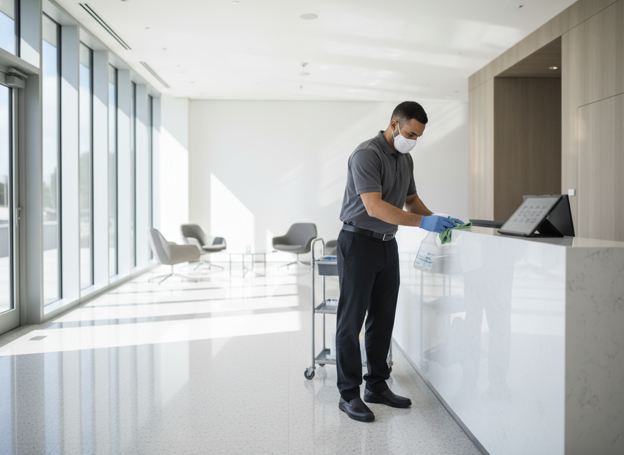
Full-service janitorial isn't just "cleaning." It's a structured, ongoing program designed to keep a facility consistently safe, presentable, & ready for daily use, especially in high-traffic environments like schools, medical offices, government buildings, & multi-tenant properties.

This blog breaks down what full-service janitorial includes, why it's different from basic cleaning, & what the process typically looks like from walkthrough to ongoing quality control.

What "Full-Service Janitorial" Really Means

Full-service janitorial is a complete cleaning & upkeep plan that covers:

  • Daily or frequent cleaning (often 5-7 days/week depending on the facility)
  • Restroom sanitation & restocking
  • Trash removal & liner replacement
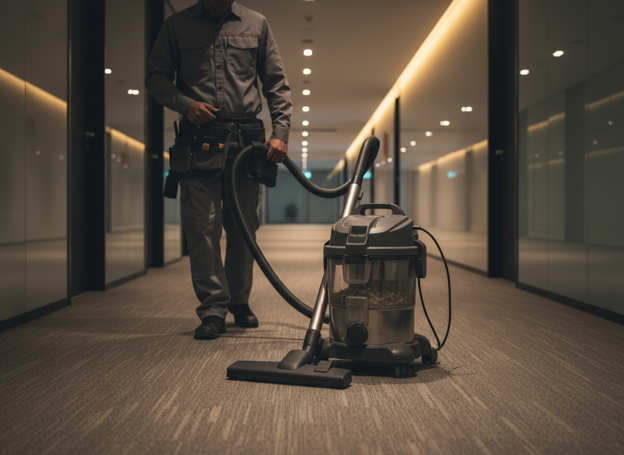
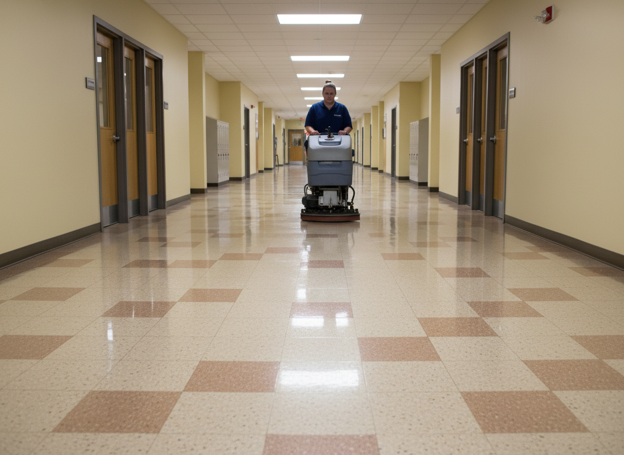
  • Floor care (vacuuming, mopping, spot-cleaning, & scheduled deep care)
  • Touchpoint disinfection (handles, switches, rails, counters)
  • Breakroom/kitchenette cleaning
  • Entryway & lobby care (first impressions matter)
  • Ongoing reporting + quality checks

The key difference: it's built as a system, staffing, checklists, schedules, & inspections, so the building stays consistently clean, not "caught up" once it's already messy.

Why Full-Service Janitorial Is Worth It

Facilities often switch to full-service janitorial when they're dealing with one (or more) of these issues:

  • Complaints from tenants, staff, or visitors
  • Restrooms falling behind (odor, supplies, visible grime)
  • Floors looking worn even after "regular cleaning"
  • Dust buildup in corners, vents, & edges
  • Inconsistent results because cleaning is reactive, not planned
  • Health & safety concerns (especially during flu season)

A full-service approach reduces surprises. Instead of waiting for problems, the cleaning plan prevents them.

The Typical Full-Service Janitorial Process

Most providers follow a similar process. Here's what you should expect:

1) Walkthrough + Needs Assessment

A walkthrough helps identify:

  • High-traffic zones
  • Sensitive areas (medical rooms, childcare spaces, food prep areas)
  • Floor types & problem spots
  • Current pain points (restrooms, trash overflow, odors, dust)

You'll usually discuss:

  • Desired cleaning frequency
  • Building hours & access
  • Security requirements
  • Supply responsibilities (who provides what)

2) Scope of Work + Cleaning Schedule

A good scope of work clearly outlines:

  • Daily tasks vs. weekly tasks vs. monthly tasks
  • Which areas are included (& what's excluded)
  • Any add-on services (floor scrubbing, carpet extraction, high dusting)

This is where "full-service" becomes real: it's documented & repeatable.

3) Staffing + On-Site Routine

Full-service janitorial typically includes:

  • Assigned team members
  • A consistent routine (so tasks don't get skipped)
  • Checklists by area (restrooms, offices, common areas)

Consistency is what drives results, not just effort.

4) Quality Control + Communication

The best programs include:

  • Supervisor inspections
  • Periodic walkthroughs with the client
  • A clear way to report issues (missed trash, supply shortages, spills)

This is where long-term success happens: problems get fixed fast, & the plan gets adjusted as the building's needs change.

What to Ask Before You Hire a Full-Service Janitorial Provider

Use these questions to avoid vague service & inconsistent results:

  • What's included daily vs. weekly vs. monthly?
  • How do you handle quality checks & missed tasks?
  • Who is my point of contact?
  • How do you handle staffing coverage if someone is out?
  • Do you use checklists, & can I review them?
  • How do you handle floor care beyond basic mopping?

Final Takeaway

Full-service janitorial is a preventive system, not a last-minute cleanup. When it's done right, it improves building appearance, reduces complaints, supports health & safety, & protects long-term surfaces like flooring & fixtures.

If you're comparing options, focus less on "hours" & more on the scope, inspection process, & consistency plan.

Accountable Custodial & Maintenance, Inc.
Serving Western Washington (Everett to Issaquah, Olympia, and Silverdale)
Email: info@accountablecm.com
Phone: (425) 681-4282

Recent Posts

November 9, 2026
If you manage a building in the Puget Sound region, window washing schedules can’t be “set it and forget it.” Rainy months, wind events, and short daylight windows can shift what’s realistic—and what keeps windows looking consistently clean.
November 6, 2026
Exterior window washing sounds simple until you factor in height, access, and weather. In the Puget Sound area, the weather adds a few extra challenges: long wet seasons, wind-driven rain, moss/algae growth on nearby surfaces, and months of grime getting “re-wet” instead of rinsed away. What gets cleaned (beyond the glass) A thorough exterior window service often includes: Glass panes (removing film, pollen, salt air near the water, and road grime) Frames (where runoff and oxidation can stain) Sills and ledges (debris zones that hold moisture) Screens (when applicable) Tracks (more common on ground-level/operable windows)
October 30, 2026
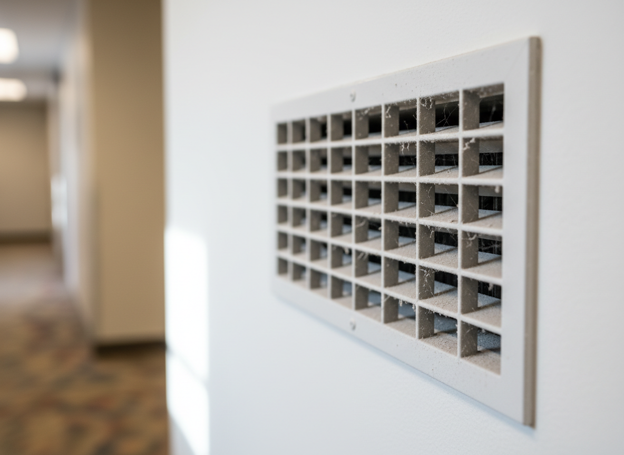
Most people hear “HVAC cleaning” and picture someone vacuuming a vent. In reality, HVAC systems have multiple components that collect dust, debris, and moisture—and each part affects airflow, comfort, and indoor air quality in different ways. The main areas HVAC cleaning can include Air ducts (supply + return): Where dust and debris can build up over time, especially after construction, remodels, or years of heavy use. Registers and grilles: The visible vent covers. These often show dust first, but they’re only one piece of the system. Coils (evaporator coil): Coils can collect dust and biofilm. When coils are dirty, airflow and heat exchange can be reduced. Blower components: Fans and blower housings can hold dust that impacts airflow and system efficiency. Drain pans and drain lines: Moisture collects here. If not maintained, it can contribute to odors and microbial growth. Air handler cabinet: The interior housing that can accumulate dust and debris.

By Accountable Custodial & Maintenance, Inc. • October 23, 2026
How to build a janitorial scope of work covering both full-service janitorial and supplemental services, so your facility stays consistently clean with measurable results.

By Adam Murphy • October 16, 2026
If you manage a building, HVAC cleaning usually comes up after complaints: dust, odors, hot/cold spots, or “the air feels off.” The tricky part is knowing whether HVAC cleaning will actually solve the problem—or if the issue is filtration, humidity, or maintenance.  Here’s a practical way to think through it.
October 9, 2026
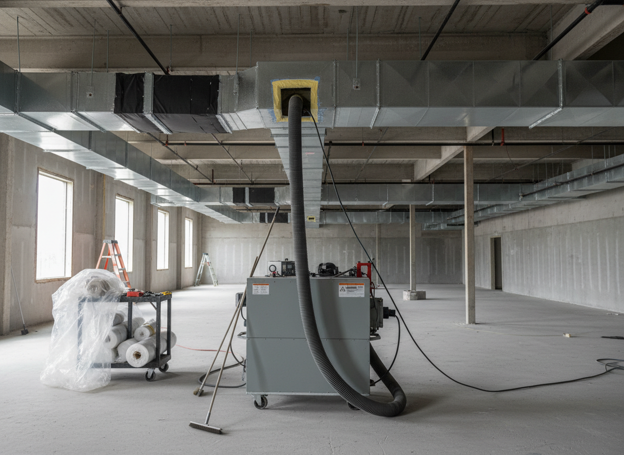
If you’ve never scheduled HVAC cleaning before, it can feel like a black box: What are they doing up there? How do you know it worked? How do you keep dust from ending up everywhere? Here’s a clear, start-to-finish overview of what a professional HVAC cleaning appointment often includes. Before the cleaning: walkthrough + scope confirmation A provider should confirm: Equipment locations (air handlers, mechanical rooms, roof access) What’s included (ducts, coils, blower, drain pan, registers) Access needs (keys, escorts, ladder/lift requirements) Protection plan for occupied spaces
October 2, 2026
What supplemental janitorial services are, when they're needed, and how to build them into your cleaning plan without disrupting operations.