


Building a Janitorial Scope of Work That Actually Works (Full-Service + Supplemental)

Accountable Custodial & Maintenance, Inc. • October 23, 2026

Share this article

One of the biggest reasons janitorial programs fail isn't effort, it's unclear expectations. When the scope of work is vague, cleaning becomes inconsistent, complaints increase, & both sides end up frustrated.

This blog walks through how to build a janitorial scope of work that covers both full-service janitorial & supplemental services, so the facility stays consistently clean & the results are measurable.

Why Scope of Work Matters More Than "Price Per Month"

A monthly price doesn't tell you:

  • What's being cleaned (& what's not)
  • How often tasks happen
  • Who checks the work
  • What happens when something is missed
  • Whether deep cleaning is included or extra

A clear scope of work prevents misunderstandings & protects the building's standards.

Step 1: Define Your Facility Needs

Start with the basics:

  • Building type (office, school, medical, multi-tenant, government)
  • Square footage & number of floors
  • Restroom count & usage level
  • Floor types (carpet, VCT, tile, concrete)
  • Traffic patterns (entries, hallways, breakrooms)

Then list your top pain points:

  • Restroom odor
  • Dust buildup
  • Floors looking dull
  • Trash overflow
  • Fingerprints on glass
  • Breakroom mess

This becomes the foundation of your scope.

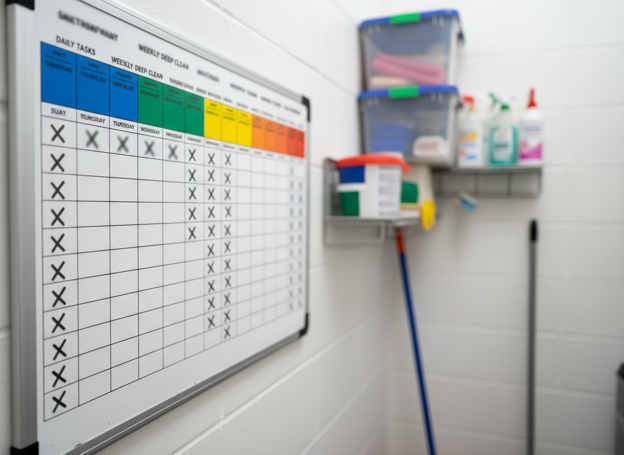
Step 2: Break Tasks Into Daily / Weekly / Monthly

A strong scope separates tasks by frequency.

Daily (or each service visit)

  • Empty trash + replace liners
  • Restroom sanitation + restocking
  • Vacuum/mop high-traffic areas
  • Disinfect touchpoints
  • Spot-clean glass & spills

Weekly

  • Detailed breakroom cleaning
  • Dusting reachable surfaces
  • Vacuum edges & corners
  • Clean interior glass more thoroughly
  • Wipe doors & frames

Monthly (or rotating)

  • High dusting (vents, ledges, corners)
  • Deep restroom detailing (baseboards, behind fixtures)
  • Floor scrubbing in key areas
  • Carpet spotting/extraction as needed
  • Detail cleaning: walls, scuffs, buildup zones

This is where supplemental janitorial lives, built into the plan instead of being an afterthought.

Step 3: Clarify "Who Does What" (Supplies, Access, Security)

A scope should clearly state:

  • Who provides consumables (toilet paper, soap, paper towels)
  • Who provides cleaning supplies/equipment
  • Access rules (keys, codes, escort requirements)
  • Alarm procedures & security expectations
  • Reporting process for maintenance issues (leaks, broken dispensers)

This avoids gaps that lead to complaints.

Step 4: Add Quality Control & Communication Standards

This is the difference between "cleaning" & a real janitorial program.

Include:

  • Inspection frequency (weekly, bi-weekly, monthly)
  • Checklist sign-off (digital or paper)
  • How issues are reported & resolved
  • Response time expectations for urgent needs (spills, restroom incidents)

If you want consistent results, you need a consistent inspection & feedback loop.

Step 5: Make Room for Seasonal Changes

Buildings aren't static. Your scope should account for:

  • Winter: salt/grit, wet floors, entryway buildup
  • Spring: pollen/dust, window & glass needs
  • Summer: higher traffic events, deeper floor care
  • Fall: dust, leaves, prep for wet season

A flexible plan prevents the building from slipping during seasonal peaks.

Final Takeaway

A janitorial scope of work should read like a playbook:

  • Clear tasks
  • Clear frequency
  • Clear responsibility
  • Clear quality checks
  • Clear communication

When full-service janitorial & supplemental services are planned together, the building stays consistently clean, & you avoid the cycle of "it was fine last month, now it's not."

 Accountable Custodial & Maintenance, Inc.
Serving Western Washington (Everett to Issaquah, Olympia, and Silverdale)
Email:
info@accountablecm.com
Phone:
(425) 681-4282

Recent Posts

By Adam Murphy • October 16, 2026
If you manage a building, HVAC cleaning usually comes up after complaints: dust, odors, hot/cold spots, or “the air feels off.” The tricky part is knowing whether HVAC cleaning will actually solve the problem—or if the issue is filtration, humidity, or maintenance.  Here’s a practical way to think through it.
October 9, 2026
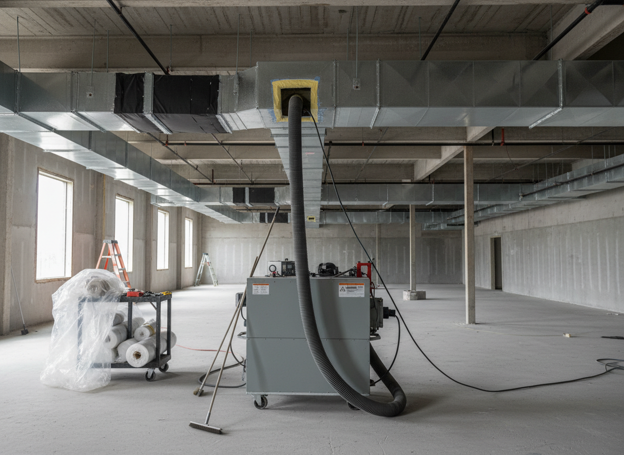
If you’ve never scheduled HVAC cleaning before, it can feel like a black box: What are they doing up there? How do you know it worked? How do you keep dust from ending up everywhere? Here’s a clear, start-to-finish overview of what a professional HVAC cleaning appointment often includes. Before the cleaning: walkthrough + scope confirmation A provider should confirm: Equipment locations (air handlers, mechanical rooms, roof access) What’s included (ducts, coils, blower, drain pan, registers) Access needs (keys, escorts, ladder/lift requirements) Protection plan for occupied spaces
October 2, 2026
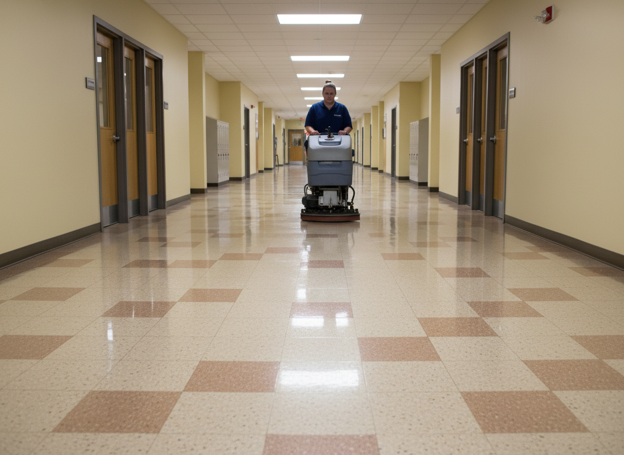
What supplemental janitorial services are, when they're needed, and how to build them into your cleaning plan without disrupting operations.
October 2, 2026
A breakdown of what full-service janitorial includes, why it differs from basic cleaning, and what the process looks like from walkthrough to ongoing quality control.